
Image-Guided Injections & Therapeutic Procedures Offered
Our interventional team performs a comprehensive range of minimally invasive, image-guided procedures to relieve pain, restore function, and promote healing.
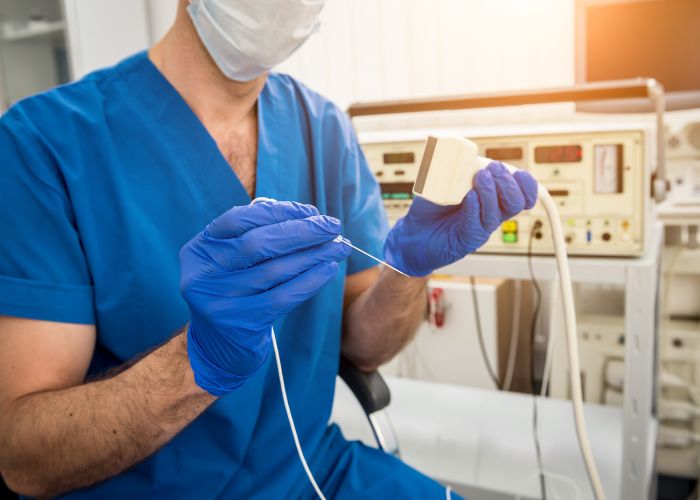
Each procedure is performed under Ultrasound or CT guidance to ensure precise placement and optimal results.
At South Coast Radiology, we offer the following interventional procedures:
Common Interventional Procedures
Core Biopsy & Fine Needle Aspiration
Performed under imaging guidance, these procedures obtain tissue or fluid samples from an area of concern for diagnostic purposes.
They are quick, safe, and essential for confirming or excluding disease.
Corticosteroid Injections
Cortisone injections reduce inflammation and pain in joints, soft tissues, or around nerves.
Common sites include shoulders, hips, knees, and the spine – often providing relief lasting several months.
Epidural Injections
An epidural injection delivers anti-inflammatory medication into the epidural space of the spine to relieve back, leg, or nerve-related pain.
It is often used for conditions such as sciatica or disc protrusion.
Facet Joint Injections
These injections target the small joints in the spine that cause neck or back pain.
The medication helps reduce inflammation and confirm the source of discomfort.
Injections for Osteoarthritis
Corticosteroid, hyaluronic acid, PRP, or ACS injections may be used to reduce inflammation, ease stiffness, and improve joint function in areas such as the knees, hips, and shoulders.
Musculoskeletal & Joint Injections
Image-guided injections deliver medication directly into inflamed joints, bursae, or soft tissues.
They are commonly used to treat bursitis, tendonitis, arthritis, and sports-related injuries.
Nerve Root Block Injections
Used to identify or treat nerve irritation in the spine, this procedure delivers medication around the affected nerve root to reduce inflammation and pain radiating into the arms or legs.
Platelet-Rich Plasma (PRP) Injection
PRP therapy uses your own blood platelets to deliver growth factors that promote healing and tissue regeneration.
It’s particularly beneficial for tendon injuries, osteoarthritis, and sports-related conditions.
Radiofrequency Ablation/Denervation (RFA/RFD)
Radiofrequency Ablation (RFA) or Radiofrequency Denervation (RFD) is a minimally invasive procedure that uses precisely controlled heat to interrupt pain signals from targeted nerves.
Performed under CT or Fluoroscopic guidance, a fine electrode is positioned next to the affected nerve and activated to stop pain transmission. Relief typically develops over several days and can last 6–18 months or longer, providing an effective non-surgical solution for chronic pain.
RFA is often used to treat:
- Chronic neck or back pain (facet or sacroiliac joint)
- Peripheral nerve pain
- Nerve-related arthritis pain
Sacroiliac Joint Injections
These injections deliver anti-inflammatory medication to the sacroiliac joints – a common source of lower back or buttock pain.
They can provide both diagnostic information and therapeutic relief.
Additional Interventional Procedures
Autologous Blood Injection (ABI)
ABI involves injecting a small amount of your own blood into an injured tendon or ligament.
This stimulates natural healing by promoting tissue repair and collagen production – often used for chronic tendon injuries such as tennis elbow.
Achilles Paratenon Stripping
Used to treat chronic Achilles tendinopathy, this procedure releases adhesions and improves blood flow around the tendon.
It helps reduce pain and restore movement for patients who have not responded to conventional therapy.
Alcohol Injection
Alcohol injections are used to treat small nerve-related growths (such as Morton’s neuroma) or cystic structures.
The alcohol solution safely destroys the problematic tissue or nerve fibres, reducing pain and recurrence.
Botox Injections
Botulinum toxin (Botox) injections are used therapeutically to relieve conditions such as chronic muscle spasm, pelvic floor dysfunction, or nerve-related pain.
Image guidance ensures accurate delivery to the target muscle.
Cytokine Therapy (Autologous Conditioned Serum – ACS)
Also known as Cytokine Therapy, Autologous Conditioned Serum (ACS) uses a patient’s own blood to create a serum rich in anti-inflammatory proteins and growth factors.
This serum is injected under imaging guidance into the affected joint or soft tissue to reduce inflammation, relieve pain, and promote natural healing – particularly for osteoarthritis and tendon injuries.
ACS therapy offers a natural alternative to steroid injections and may provide longer-lasting improvement.
Direct Tendon Injections
Used to treat tendon injuries, this involves injecting medication directly into the affected tendon to reduce inflammation and stimulate repair.
Often used in rotator cuff, elbow, or knee tendons.
Ganglion Aspiration & Injection
A minimally invasive alternative to surgery for ganglion cysts.
The cyst is drained under ultrasound guidance, and a small amount of steroid or alcohol may be injected to reduce recurrence.
Medial Branch Blocks
This diagnostic injection temporarily numbs the nerves that supply the facet joints in the spine.
If pain relief occurs, you may be a candidate for Radiofrequency Ablation (RFA) for longer-term pain relief.
OncoBeta® Skin Cancer Treatment
A specialised, non-invasive therapy for non-melanoma skin cancers.
OncoBeta® uses targeted beta radiation to destroy cancer cells while preserving healthy surrounding tissue – offering excellent cosmetic results without surgery.
Peripheral Nerve Injections
Polidocanol is used to treat vascular malformations or cysts by collapsing abnormal vessels.
The procedure is quick, effective, and performed under imaging guidance for accuracy and safety.
Polidocanol Injection
Targeted injections to treat pain or irritation in peripheral nerves – such as those in the shoulder, hip, or limbs.
These can provide temporary or lasting pain relief and assist in diagnosis.
Prolotherapy
Prolotherapy involves injecting a mild irritant solution to stimulate the body’s natural healing response in damaged ligaments or tendons.
The irritant encourages repair and strengthening of the treated area.
Shoulder Hydrodilatation
Hydrodilatation (distension arthrography) involves injecting fluid into a tight shoulder joint capsule to improve range of motion and relieve pain – often used for frozen shoulder.