Our Services
Bone Mineral Densitometry
At South Coast Radiology, we use advanced technology to measure bone density quickly, safely, and accurately.
A Bone Mineral Densitometry scan measures the density of bone minerals. It provides information about the patient’s bone strength or fragility, and their risk of fractures or broken bones. The higher the density, generally, the lower the risk of fracture.
Our experienced radiographers perform BMD scans across multiple convenient Gold Coast locations.
What is a Bone Mineral Densitometry Scan?
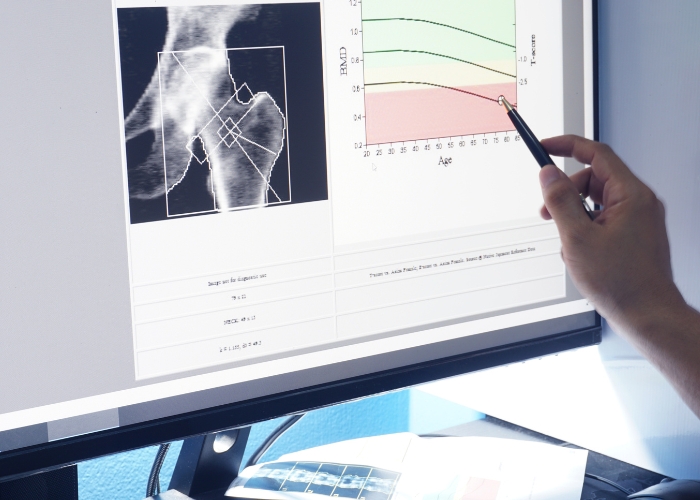
A Bone Mineral Densitometry scan is a specialised low-dose X-ray that measures the strength and density of your bones, usually in the spine, hips, or forearm.
It’s the most accurate method for diagnosing osteoporosis, a condition where bones become fragile and more prone to fractures.
Why might I need a BMD Scan?
Your doctor may refer you for a Bone Mineral Densitometry scan to:
- Detect osteoporosis or osteopenia (early bone loss)
- Monitor bone changes during treatment
- Assess fracture risk in older adults
- Evaluate bone health in hormone or calcium disorders
- Track bone density after long-term medication use (e.g. corticosteroids)
Bone Mineral Densitometry is a quick, painless, and non-invasive way to understand your bone health and take preventive action early.
Who should consider a Bone Mineral Densitormery SCan?
Your may benefit from a Bone Mineral Densitometry scan if you:
- Are aged over 50
- Have a family history of osteoporosis or fractures
- Have low body weight or vitamin D deficiency
- Have experienced early menopause
- Take corticosteroids or certain medications long-term
About Your Test

Before your appointment
- No special preparation is needed.
- Avoid calcium supplements for 24 hours before your appointment.
- Wear loose, comfortable clothing without zips or metal fasteners.
- Bring previous bone mineral densitometry results for accurate comparison.
- If you’ve recently had a nuclear medicine or barium study, please let us know as this may affect scheduling.

On the day
All Bone Mineral Densitometry scans are performed by our accredited radiographers, ensuring precision and comfort.
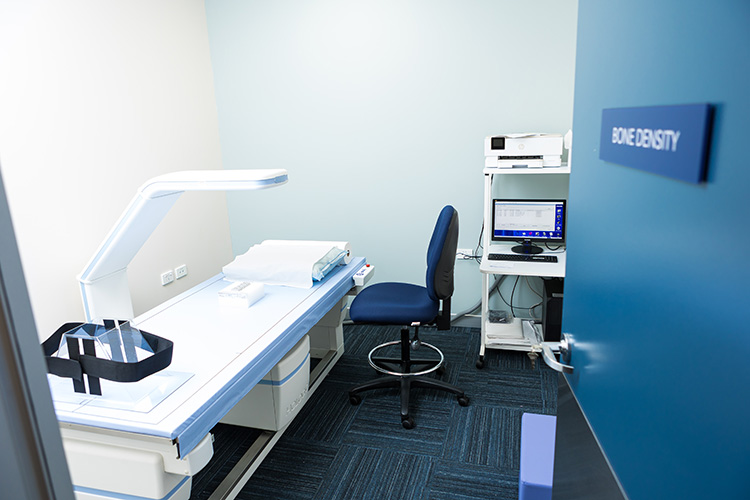
- You’ll lie comfortably on a padded table while a scanning arm passes over the area being examined.
- The scan is completely painless and takes 10–15 minutes.
- You’ll need to remain still, but you can breathe normally.

After your appointment
- You can resume normal activities straight away.
- A specialist radiologist will interpret your images and provide a report to your doctor.
- Your results are expressed as T-scores and Z-scores, comparing your bone density to healthy averages for your age and sex.
- If follow-up scans are needed, your doctor may recommend repeating the test every 12–24 months to track bone health.
Safety
Bone Mineral Densitometry scans use very low radiation doses, far less than a standard chest X-ray and comparable to one day of natural background radiation.
All procedures comply with Australian Radiation Safety Standards and are considered very safe, even for repeat monitoring.
Costs and Medicare Rebates
Medicare rebates apply for eligible patients, including those aged 70+ or with medical conditions affecting bone health.
Our staff can confirm your eligibility and any out-of-pocket costs before your appointment.
Frequently Asked Questions
Yes. Bone Mineral Densitometry scans use extremely low radiation levels.
Many patients are re-tested every 1-2 years depending on medical history and risk factors.
Yes. A referral from your GP or specialist is required to ensure the correct test and Medicare eligibility.
Prior to your scan and to ensure optimal imaging, you may be asked to change into a gown. A change cubicle will be provided to ensure your privacy and you will be asked to bring your belongings will you, carry baskets are provided. You will be asked to place your belongings in a suitable location within the room for the duration of your scan. After your scan, you will be provided with a change cubicle to ensure your privacy. Please ensure you have all your belongings with you prior to leaving the department. If you accidentally leave anything behind, please contact our staff to advise and we will endeavour to locate your belongings and return them to you.
The entire procedure takes approximately 15-20 minutes to complete, although real scanning time is only 2-3 minutes.
Your images and report are provided through a secure online system to your doctor or healthcare provider. We will also provide you with a printed copy to bring to your next appointment.
Take a proactive step in protecting your bone health
Talk to your GP about a referral for a Bone Mineral Densitometry scan today.
Body Composition Scans
Body composition analysis can guide physical performance goals, provide insight into metabolic health, and help manage obesity.
Clinically useful measurements include:
- Total body fat percentage
- Fat distribution across the body
- Lean muscle mass
Visceral fat estimation (associated with increased risk of heart disease and type 2 diabetes) - Regional analysis (e.g. arms or legs) to identify imbalances