Why Prostate Health matters
Prostate cancer is the most commonly diagnosed cancer in Australian men. The good news is that when doctors find prostate cancer early, the survival rate is 96%.
Talking to your doctor about prostate health could protect your quality of life.
Our expert radiology team is here to look after you with highly effective medical imaging examinations that detect prostate cancer including Prostate MRI, Prostate PSMA PET and Prostate Ultrasound.
At South Coast Radiology, we accept referrals from all GPs and medical specialists.
-
MRI Imaging Services
Available in 6 locations on the Gold Coast.
-
Team of Professionals
Highly trained specialists in bone conditions.
-
Call 1300 197 297
Please have a referral handy!
Detecting Prostate Cancer Early
Early detection makes a difference. If your prostate specific antigen (PSA) level is elevated, your doctor may suggest further investigation including medical imaging or a Digital Rectum Exam (DRE) performed by a urologist.
What is the Prostate?
The prostate gland is a small organ, located just below the bladder and in front of the rectum.
The prostate surrounds the tube that carries urine, called the urethra. As men age, the prostate can change. This can lead to problems like an enlarged prostate or benign prostatic hyperplasia (BPH).

Common Symptoms of Prostate Problems
Changes in urinary habits are often the first sign of an issue. Symptoms may include:
- A weak flow of urine or difficulty starting/stopping
- Getting up several times at night to urinate
- Pain or burning when passing urine
- Blood in urine or semen
- Ongoing pelvic discomfort
These symptoms do not always mean you have prostate cancer. However, they may suggest BPH or another condition. If you notice changes, talk to your doctor.
Screening options include
Prostate Specific Antigen (PSA) Test
A simple blood test that measures PSA level, which may rise because of prostate conditions. While high PSA doesn’t always mean cancer, it’s an important first step in detecting prostate cancer.
Digital Rectal Exam (DRE)
A quick physical check where your doctor feels the front of the rectum to assess the size and texture of the prostate gland.
Multi-Parametric MRI
- Provides detailed images of the prostate and helps identify cancer cells.
- Sometimes avoids the need for biopsy if results are convincingly clear.
- If doctors need a biopsy, MRI guides them to the most accurate sample
Prostate Ultrasound
- Uses sound waves to examine the prostate gland.
- Detects nodules, enlargement, or other abnormalities.
- Safe, non-invasive, and radiation-free.
Further Imaging
If you’ve been diagnosed with prostate cancer, you may require additional imaging such as PET-CT, CT, or Bone Scans to :
- Assess whether cancer cells have spread
- Guide doctors in planning the best treatments for prostate cancer
- Monitor effectiveness of treatment
- Provide information to surgeons
Why Screening Matters
Early detection allows for more treatment options, fewer side effects, and a better quality of life.
- Early stage prostate cancer often has no symptoms.
- A simple blood test and quick exam can offer peace of mind.
- If caught early, prostate cancer is highly treatable, and survival rates are very high.
Don’t wait until symptoms appear. Be proactive and talk to your doctor today.
Take the Next Step
If you are concerned about your prostate gland, pay attention to changes in your urine flow. If you have a high PSA level, it’s time to take action.
Book a prostate health check or scan today. Protect your future and your quality of life.
Brand new technology is here to help detect prostate cancer early.
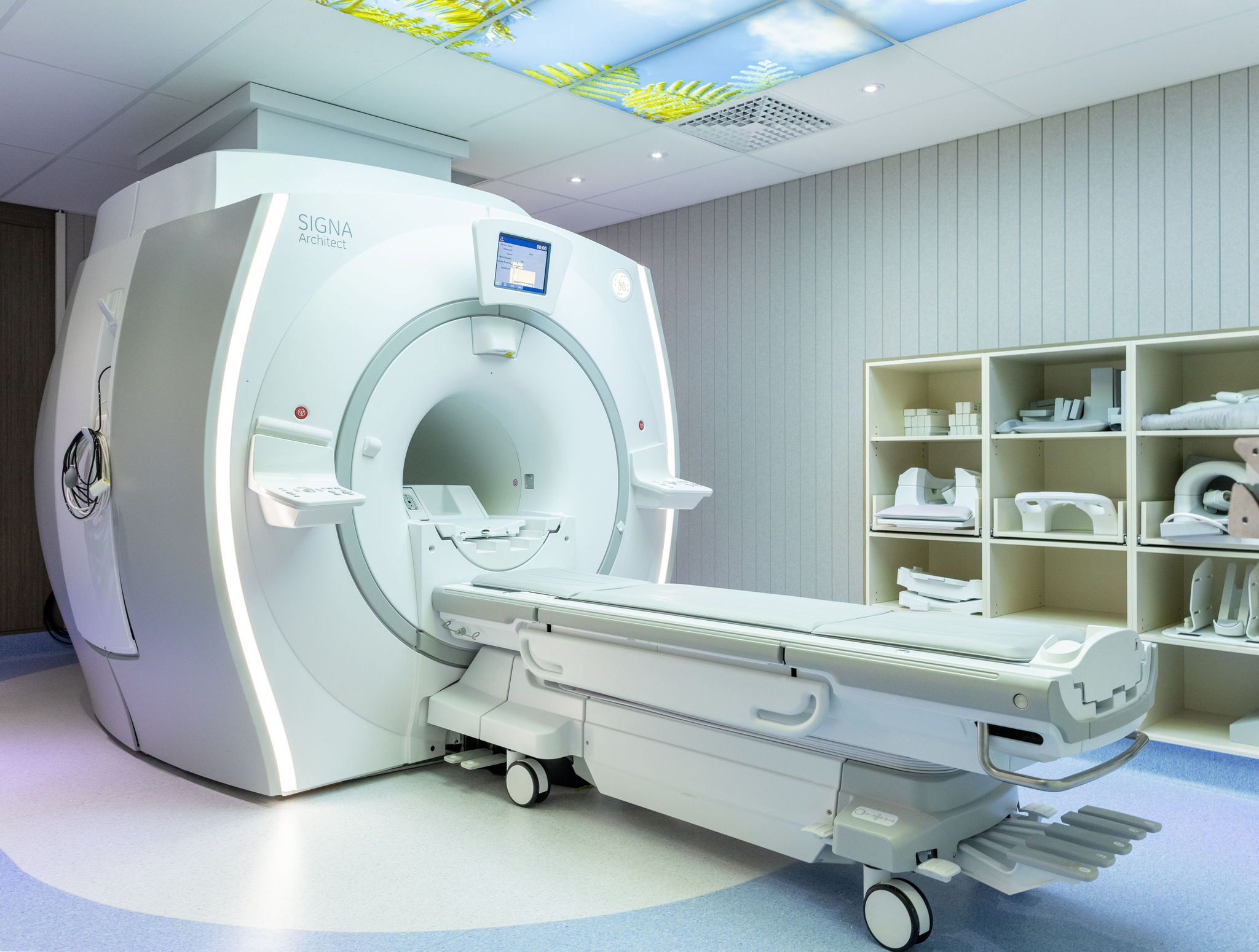
Until recently, prostate cancer was difficult to image and detect. MRI has emerged as the imaging technique of choice for detecting prostate cancer and provides important information for determining treatment options. MRI of soft tissue and organs (such as the prostate) are clearer and more detailed than other imaging methods. MRI enables early diagnosis of prostate cancer as well as an accurate evaluation of the tumour’s extent.
MRI can determine if the cancer is entirely inside the prostate gland or has spread to nearby or distant organs. For men with an intermediate or high probability of cancer spread outside the prostate, MRI improves the accuracy of information, allowing your doctor to determine a more appropriate treatment plan. MRI also provides important information to surgeons. Understanding the extent of cancer in your prostate helps your surgeon to preserve delicate arteries and nerves that are essential for sexual function and bladder control.
Furthermore, prostate MRI is used to evaluate other prostate problems such as infection or abscess, prostate enlargement, congenital abnormalities or complications after pelvic surgery.
Five industry-leading prostate MRI locations
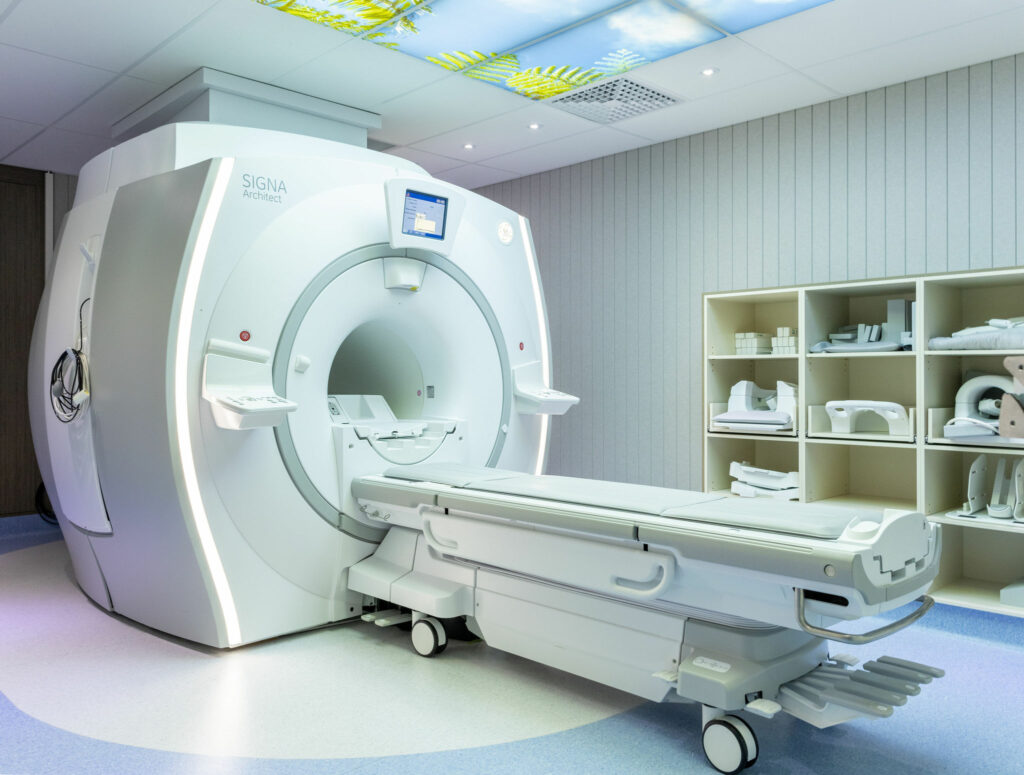
South Coast Radiology is proud to host 5 MRI locations that provide state-of-the-art medical imaging of the prostate: Benowa, Pimpama, Robina, Smith Street and Toowoomba. Additionally, we also maintain general MRI sites at John Flynn Private Hospital and Pindara Private Hospital in addition to an MRI site in Mackay.
Our Benowa, John Flynn Hospital and Toowoomba MRI scanners are fully licensed by Medicare, while our Smith Street and Robina MRI Systems are partially licensed by Medicare. These four MRI scanners are amongst the very few which receive licensing from Medicare on the Gold Coast.
We also have Australia’s first MRI AIR Tech scanners at selected clinics. This technology utilises AIR Recon DL technology to deliver superior image quality compared to previous technologies in a significantly reduced scan time, without any compromises to image quality or quantity.